Floor Polishing in Singapore: A Practical Guide for Condos and Homes
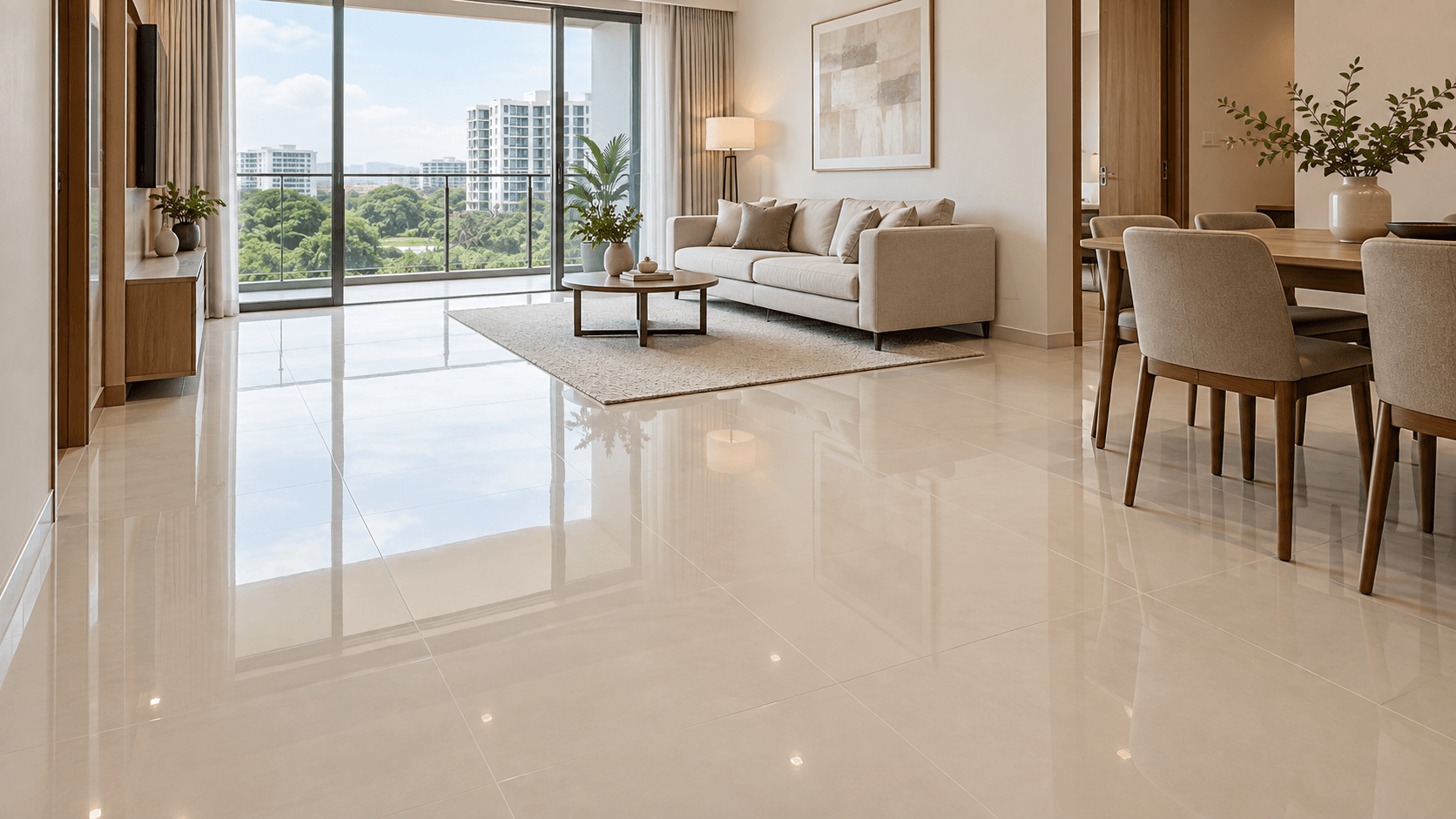
Floor polishing can improve the appearance of suitable stone, tile and timber floors, but the correct treatment depends on the exact material and its current condition. Before booking, identify the floor type, measure the approximate area and take clear photos in natural light. This helps the team recommend a realistic scope instead of applying one process to every surface.
What floor polishing can and cannot do
Polishing is usually intended to refresh a suitable floor finish, reduce the appearance of everyday wear and improve its sheen. It is not a guaranteed repair for every defect. Deep scratches, cracks, loose tiles, severe etching, moisture damage, uneven surfaces and permanent stains may need separate repair or may remain visible after treatment.
Start with the floor material
Marble and granite
Natural stone needs a material appropriate method. The assessment may consider dull patches, scratches, staining, old residue, previous coatings, grout condition and whether any grinding or marble glue repair is required. The final finish should be discussed before work starts because the achievable result depends on the stone and its existing condition.
Homogeneous tiles and other tile floors
Tile treatment can involve deep cleaning, polishing or grout work, depending on the tile type and surface finish. Chemical washing is not suitable for every tile, so product compatibility and stain type should be checked first. Tell the team if the floor has had sealing products, strong cleaners or recent renovation work.
Parquet and timber floors
Parquet requires a timber appropriate process. Water damage, lifting boards, worn coating, gaps, termites, deep gouges and unstable areas should be flagged before work is booked. Avoid treating timber as if it were a stone or tile surface, as unsuitable products and excess moisture can cause damage.
Vinyl and other finishes
Vinyl floors often need cleaning and a suitable protective finish rather than abrasive polishing. Share photos of the flooring and any care instructions so the treatment can be assessed correctly.
Floor scrubbing versus floor polishing
Floor scrubbing focuses on removing dirt, residue and built up grime from suitable hard floors. Floor polishing is a different process used to restore or improve an appropriate finish. Some homes need scrubbing only, while others may need polishing, grouting, repair or a combination of services. An assessment prevents unnecessary work.
What to share when requesting a quotation
Send the property type, approximate square footage, floor material, rooms or areas involved and clear photos of the whole floor plus close ups of problem spots. Mention furniture that cannot be moved, access or management requirements, parking, preferred date and whether you need related work such as epoxy grouting, tile cleaning or painting.
Prepare the home before the appointment
Remove loose rugs, small items and valuables from the work area. Confirm furniture clearance in advance, keep the route from the lift or entrance clear and check condominium visitor registration and permitted working hours. Keep children and pets away from the work zone until the team confirms the area is safe to use.
Aftercare matters
Follow the aftercare guidance provided for your particular floor and finishing method. Use products suitable for the material, clean spills promptly and avoid dragging heavy furniture across the surface. Ask before placing rugs or moving furniture back if a coating or treatment requires curing time.
Request Floor Polishing in Singapore
ALLDONE assesses floor polishing requests for HDB flats, condominiums, landed homes and selected commercial spaces in Singapore. Share your floor photos and approximate area for a tailored quotation that matches the material and condition of your home.